

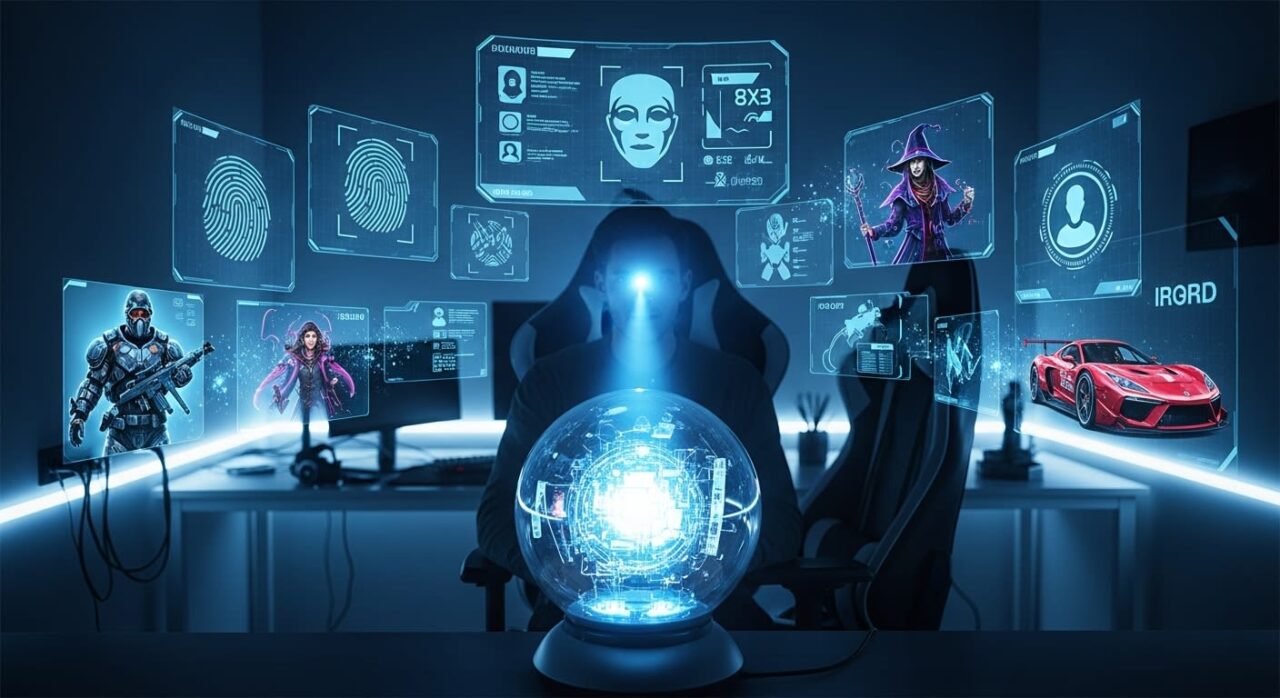
When gaming meets identity verification, the result is both futuristic and unsettling.
Mythical Games — best known for its blockchain-powered sports titles like NFL Rivals and FIFA Rivals — has become the first major publisher to integrate Sam Altman’s World ID, bringing biometric player verification into mainstream online gaming.
A new gatekeeper for “proof of human”
The partnership will embed World ID across the Mythical ecosystem, including Pudgy Party, FIFA Rivals, and NFL Rivals.
The stated aim: curb bot fraud, leaderboard manipulation, and black-market trading in in-game economies by confirming that each player is a verified human being.
To do so, World ID uses iris-scanning hardware — the same orb-shaped device that has fueled global controversy over biometric data collection. Once scanned, users receive a cryptographic credential stored on the World Chain blockchain, linking their verified status to supported apps and games.
“We’re bringing proof of human and trust into the next era of gaming,” said John Linden, CEO of Mythical Games. “Our goal is to make every player part of a verified global economy where digital ownership and fair play are guaranteed.”
The World ID logic
For World ID, the integration is a strategic leap. “As AI becomes more capable, we need ways to prove who’s real,” said Ajay Patel, Head of World ID at Tools for Humanity. “Proof of human restores trust to that equation.”
Together, Mythical and World are building Mythos Chain, a new Layer 3 blockchain running atop World Chain’s Layer 2 infrastructure — a move that could merge biometric identity with digital asset ownership in one continuous system.
Privacy alarms ring
Privacy advocates see something else entirely: a test case for normalizing biometric surveillance in entertainment.
By tying gameplay to iris data, Mythical risks turning gaming accounts — which often involve minors — into vessels for uniquely identifying information.
World ID, formerly Worldcoin, has already faced investigations in Kenya, Germany, and France over how iris scans are stored, transferred, and deleted. Regulators have questioned whether users can meaningfully consent to a system that links personal biology to blockchain records.
In gaming, the stakes are even higher: the audience is global, young, and often unaware of long-term data implications. Linking a child’s gaming profile to immutable biometric credentials raises ethical and legal questions that no amount of “Web3 empowerment” can easily answer.
A digital identity dilemma
Supporters argue that verification could finally eliminate automated cheating and restore fairness to competitive online play. Detractors counter that it creates a two-tier internet — one for verified users who submit to surveillance, and another for those excluded by principle or privacy concern.
What’s being tested here isn’t just a new anti-bot measure, but a fundamental shift in what it means to participate in digital life. If gaming becomes the on-ramp to “verified humanity,” how long before every online community demands the same proof?
For now, Mythical’s move is voluntary — but as history shows, voluntary standards can quickly become default requirements. And when a pastime built on imagination begins to scan its players’ eyes, the question is no longer about fair play — it’s about where the boundary between identity and entertainment will finally be drawn.
📚 Sources
- Reclaim The Net: Mythical Games Integrates Sam Altman’s World ID for Player Verification (Ken Macon, 2025)
- OpenAI CEO Sam Altman pitches eyeball-scanning World ID to bankers – coverage link