
The European Union’s environmental ministers have declared victory again.
This time, the victory comes in the form of a “compromise” climate package for 2030 and 2040 — a package weakened just enough to acknowledge economic reality, but not enough to change its trajectory.
In Brussels’ internal language, this is called flexibility.
In economic terms, it is called delayed collapse.
The ministers now allow wider use of international CO₂ credits: a polite phrasing for outsourcing emission cuts to jurisdictions with little transparency, weak oversight, and even weaker data integrity. This is not a secret — the European Court of Auditors has warned for years that carbon offsets outside the EU are riddled with inflationary baselines, unverifiable claims, and perverse incentives. And yet, the system survives because it serves two functions:
- It lets governments maintain the illusion of constant progress.
- It keeps the financial architecture of carbon markets alive, irrespective of outcomes.
The new package does not remove these systemic flaws.
It codifies them.
CO₂ Credits: A Market Built on Fragile Assumptions
Carbon offsetting is not inherently fraudulent. There exist legitimate, scientifically verified projects — afforestation, peatland restoration, methane capture. But the supply of high-integrity credits is far smaller than the demand Brussels has just legislated into existence.
The inevitable result:
more low-quality credits, more unverifiable emissions, and more regulatory theatre.
The price of carbon in the EU Emissions Trading System hovers around €80 per ton.
Brussels expects — and quietly desires — a long-term climb toward €200–€300.
At that point, the ETS stops being a climate tool and becomes a fiscal pipeline:
a method of extracting revenue from industrial activity simply because it exists.
This is not environmental policy.
It is administrative monetization of carbon.
Competitiveness: A Word No Longer Spoken in Brussels
The EU’s official communication claims the new package “balances ambition and feasibility.”
What it actually does is increase the asymmetry between Europe and its two principal industrial competitors:
- The United States, where federal CO₂ taxation does not exist and energy costs remain structurally lower due to abundant domestic supply. Even under regulatory pressures, the U.S. maintains a clear strategic priority: economic output first, climate rhetoric second.
- China, which never pretended to join Europe’s decarbonization crusade. Fossil fuels remain the backbone of its energy system. It is building new coal capacity faster than Europe can decommission its own. Whatever CO₂ Europe saves is immediately outpaced by China’s growth in absolute terms.
Brussels, meanwhile, doubles down on mechanisms that raise domestic production costs while offering negligible global climate benefit. The logic seems simple:
“If European producers cannot compete, then they should decarbonize faster.”
This is not strategy.
It is self-imposed industrial attrition.
ETS2: The Hidden Squeeze on Citizens
The new separate emissions market for buildings and road transport — ETS2 — is scheduled to activate in 2028.
The delay from 2027 is framed as “relief for households.”
It is no such thing.
ETS2 will raise heating, construction, and mobility costs across the entire Union, introducing carbon-price exposure to activities that were previously shielded. In an inflationary environment, this is a structural tax increase disguised as climate discipline.
The logic is stark:
Every citizen becomes a revenue point in a carbon-priced society.
Eastern Europe: The Last Line of Pragmatism
Hungary, Poland, the Czech Republic, and Slovakia have refused to endorse the package. Their objection is not ideological — it is material. They understand the arithmetic:
- Lower income → higher relative energy burden
- Fossil-heavy grids → higher decarbonization costs
- Export economies → stronger exposure to global competition
Their position is the only technically coherent one presented at the table.
The Real Meaning of Brussels’ New Climate Compromise
What the EU presented as a course-correction is not a correction at all.
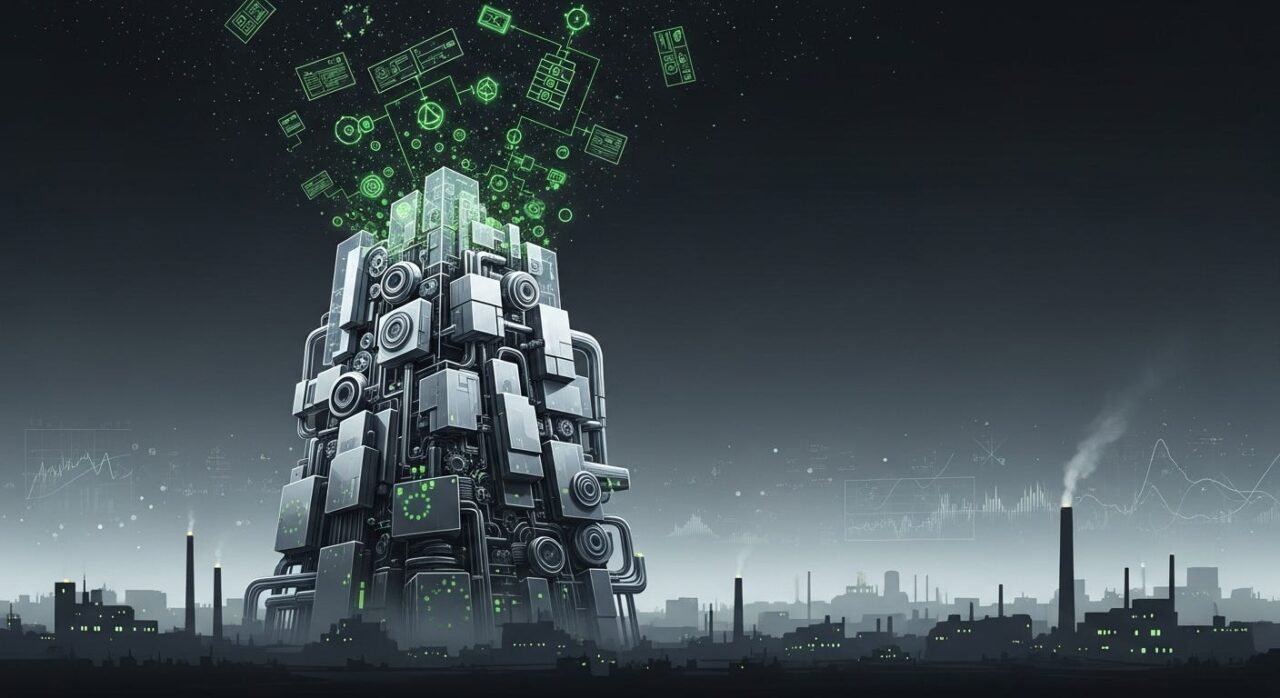
It is a controlled extension of systemic strain, ensuring the machinery does not fail abruptly but continues grinding toward the same end-state:
- higher structural energy prices
- reduced industrial competitiveness
- increased fiscal reliance on carbon markets
- externalization of emissions on paper
- internalization of costs in reality
The climate will not register these reforms.
But Europe’s productive base will.
This is not the Green Deal.
This is managed economic suffocation — slower, quieter, but unchanged in direction.
📚 Sources
- EU Council — 2040 Climate Target Agreement:
https://www.consilium.europa.eu/en/press/press-releases/2025/11/05/2040-climate-target-council-agrees-its-position-on-a-90-emissions-reduction/ - Reuters — EU Eyes Weaker Climate Deal:
https://www.reuters.com/sustainability/cop/eu-eyes-weaker-climate-goal-scramble-deal-by-cop30-sources-say-2025-11-05/ - EU Court of Auditors — Offset Quality Concerns:
https://www.eca.europa.eu - IEA — China Energy Mix and Fossil Dependency:
https://www.iea.org